


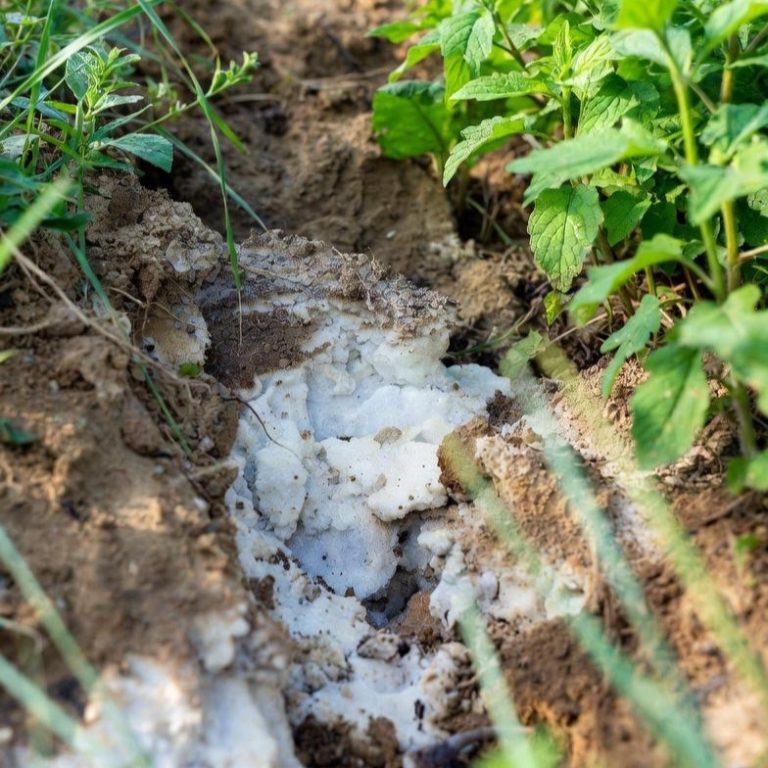
When, for any reason, the concentration of salts and minerals in the soil rises above normal levels—to the point where a plant can no longer absorb sufficient water and consequently faces growth issues—the soil is classified as “saline soil.”
In saline soils, the concentrations of salts and sodium exceed permissible limits; such soils are typically alkaline and possess a relatively high pH. As a result, the plant’s uptake of iron (Fe), manganese (Mn), copper (Cu), and zinc (Zn) is inhibited. This has a highly detrimental effect on the plant and leads to a reduction in crop yield.
As soil salinity increases, the Exchangeable Sodium Percentage (ESP) also rises.
Therefore, one of the causes of soil salinization is the presence of sodium in irrigation water, as well as the use of low-quality fertilizers (characterized by a high “salt index”).
Saline soil generally impacts all aspects of plant development, including germination, growth, and more.
Saline Soil Information and Management
How can we determine if soil is saline?
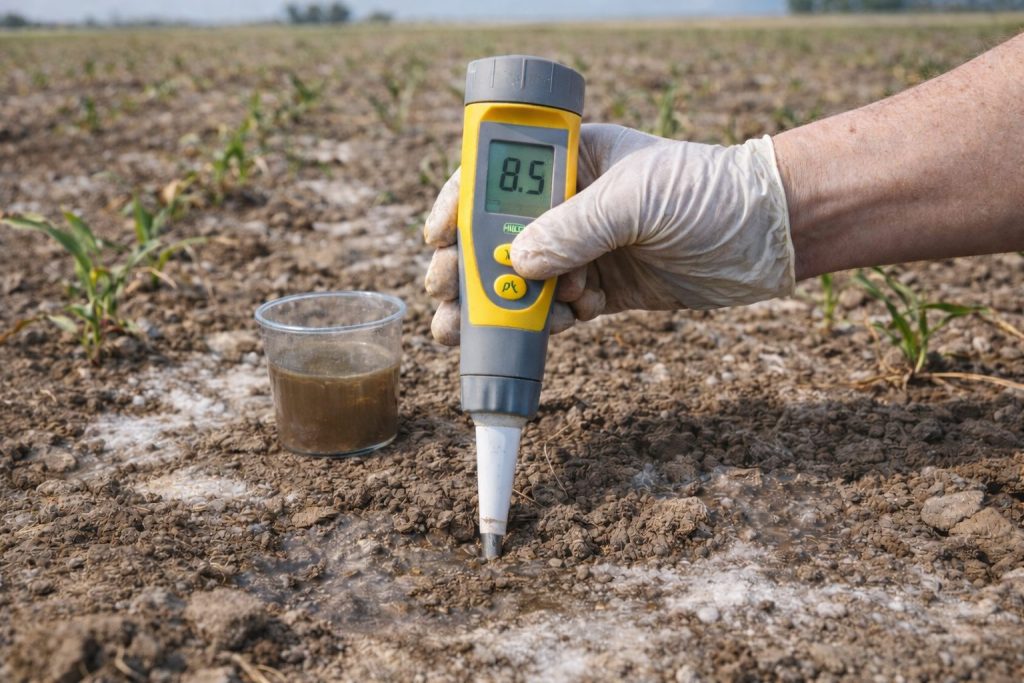
Measuring pH
Saline soils are typically alkaline; measuring the pH can help identify soil salinity.
Measuring Sodium:
The sodium status is determined by the ratio of exchangeable Na⁺ to the soil’s total Cation Exchange Capacity (CEC).
Measuring Salt Concentration:
The salt concentration in the soil solution is determined based on the principle that salts conduct electricity; this is measured in the soil’s saturation extract using a conductivity meter.
How does soil become saline?
1. Irrigation with Saline Water:
Given that water sources in different regions vary (e.g., springs, wells, etc.), their mineral (salt) content also differs. Saline water is prevalent in the northern, western, and central regions of the country; consequently, irrigation with such water leads to the accumulation of salts in the soil, eventually causing the soil to become saline. Furthermore, the presence of mineral ions in saline water—specifically an increase in the concentration of elements such as sodium and magnesium, as well as compounds like sulfates, bicarbonates, and chlorides—contributes to soil salinity.
2. Inherent Soil Salinity (Weathering of Rocks and Parent Materials):
Soil is the material covering the Earth’s surface, formed through the weathering of rocks. Weathering is a continuous yet slow process involving the gradual breakdown of rocks by various agents, such as: rain (as rainwater dissolves rock components, it facilitates their decomposition); temperature fluctuations (causing rocks to crack and fragment as temperatures rise and fall); and plant debris (which produces organic acids that contribute to the erosion of rocks).
Consequently, weathering represents the initial stage of soil formation. If the parent rocks contain mineral salts, the resulting soil will be inherently saline.
3. Excessive Use of Chemical Fertilizers (Agricultural Fertilizers):
Excessive use of chemical fertilizers diminishes the health of agricultural soil and damages its inherent properties, leading to issues such as reduced fertility. Continuous application of these fertilizers alters the soil pH, increases the susceptibility of crops to pest infestations, and accelerates the process of soil acidification.
4. Seawater intrusion into coastal lands and aquifers, exacerbated by the over-extraction of fresh water:
Seawater is inherently saline; it enters the soil through coastal areas, causing salinization. Furthermore, as groundwater flows from upstream, it comes into contact with porous rock formations—rocks containing cavities or interstices—and absorbs significant quantities of dissolved salts. Upon reaching downstream areas and infiltrating the land, this water salinizes the soil. Consequently, the potential for plant growth diminishes, or only specific salt-tolerant plant species are able to thrive in these areas. (Example: The Gotvand aquifer basin, which, unfortunately, contributes to this type of salinization.)
5. Removal of deep-rooted vegetation:
When agricultural land is cleared of native, deep-rooted plants and replaced by shallow-rooted vegetation, salt accumulation in the soil increases, causing the soil to become saline.
6. Wind-borne salts:
In coastal areas, wind transports salts from the sea onto the shore and subsequently to adjacent lands; this leads to the accumulation of salt in the soil, resulting in soil salinization.
7. Surface Evaporation and Plant Transpiration:
What is evaporation? It is the process by which water present on the soil surface converts into water vapor, driven by the sun’s thermal energy and/or low atmospheric humidity.
What is transpiration? It is a process occurring in plants, where water travels from the roots to the stems and leaves, and is subsequently released from the plant into the atmosphere as vapor through the stomata (pores) in the leaves.
Consequently, when evaporation occurs—leaving the upper soil layer dry while moisture remains deeper down—plant roots attempt to draw water from the soil. As this water moves upward, it dissolves soil salts and minerals, transporting them to the surface and resulting in soil salinization.
8. Poor Drainage (Salts remain in the soil because they are not flushed out):
In cases of poor drainage, water does not move effectively through the soil; as a result, existing salts are not leached out, and the soil remains saline.
9. Arid Climate and Low Rainfall (Salts are not removed from agricultural land):
Low rainfall and an arid climate—which accelerate the evaporation of soil moisture—prevent the leaching of salts from the soil, leading to soil salinization.
10. Use of Sewage Sludge or Treated Wastewater Effluent:
The presence of high concentrations of salts in sewage sludge or treated wastewater effluent increases the risk of soil salinization.
Visible Signs of Saline Soil
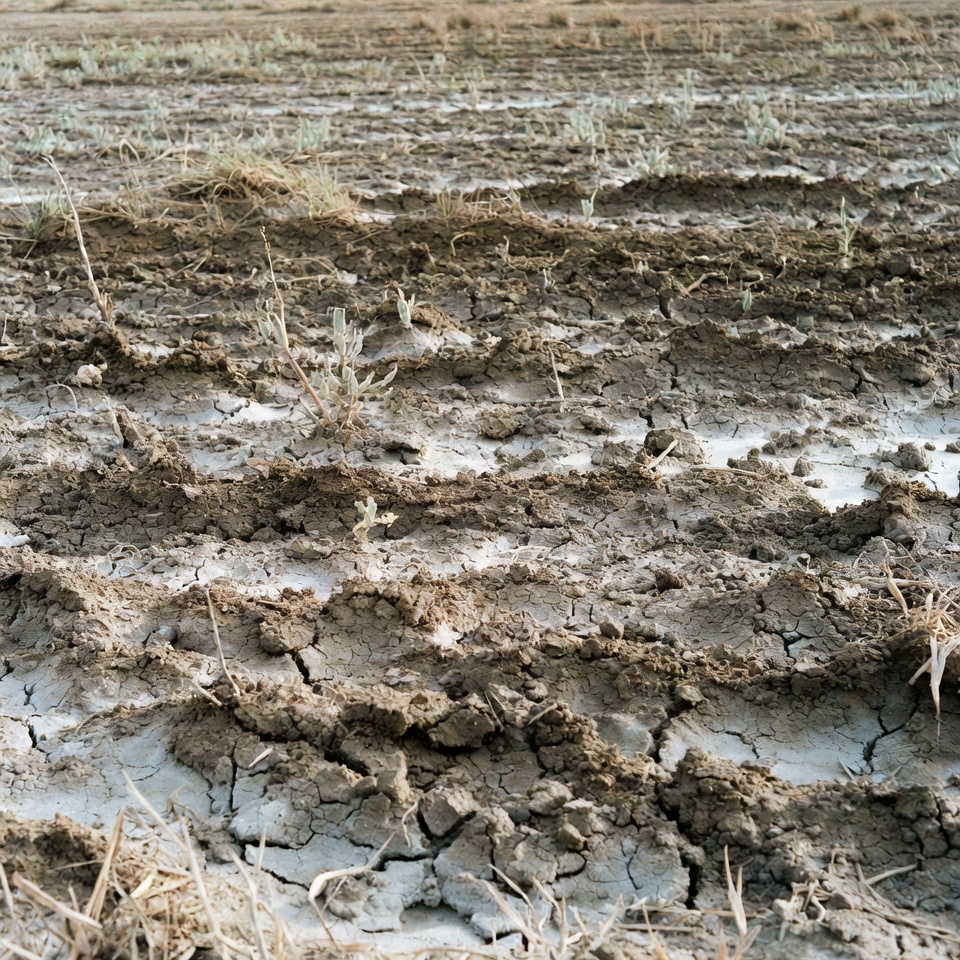
› Whitish crust on the soil surface
› Difficulty with water infiltration into the soil
› Formation of a crust or flakes on the soil surface
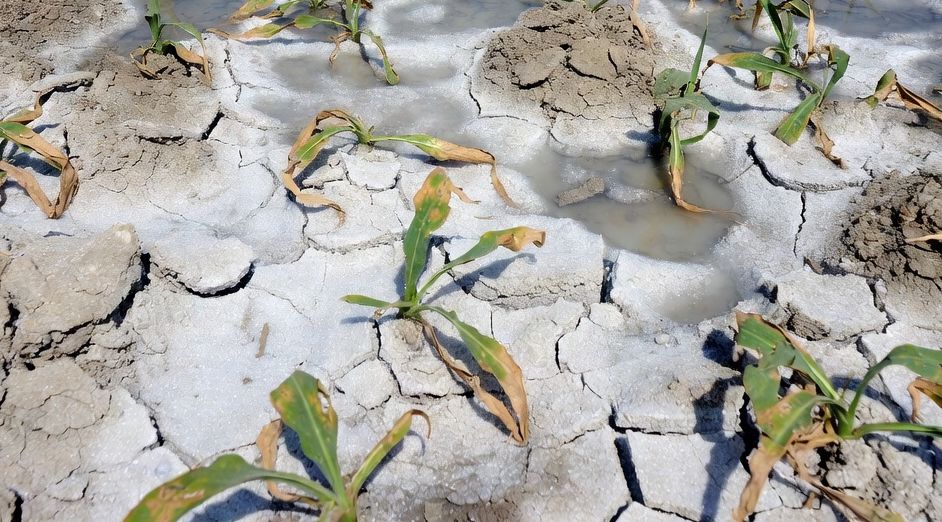
› Scorching of leaf margins
› Reduced or failed seed germination
› Reduced plant vigor
Effects of Saline Soil on Plants
Low Economic Yield
Overall, soil salinization subjects plants to various forms of stress, ultimately resulting in a reduction in crop yields.
Oxidative Stress
This is a chemical and physical phenomenon that leads to the excessive production of reactive oxygen species, which damage plant cells. Consequently, this results in a reduction in the quality of agricultural produce.
Ion Toxicity
When the concentrations of sodium, chloride, or bromide ions in irrigation water exceed permissible limits, plants may suffer damage (such as the development of small leaves, or the necrosis of tissue around leaves or fruit, etc.).
Reduced Growth
Salts can reduce water uptake, leading to water deficiency in plants. This impairs plant growth and can result in reduced crop yields.
Changes in the Plant’s Chemical Composition
Soil salinity can cause changes in the chemical composition of plant tissues—such as an increase in salt concentrations within the plant—which directly harms the plant’s performance and health.
Osmotic Stress
In the process of osmosis, water flows within a plant from areas with a low salt concentration to areas with a higher salt concentration. Consequently, when the water taken up by the plant contains high levels of salt, the flow of water within the plant is reversed, resulting in osmotic stress—a condition that affects plant growth and crop quality.
Antagonism (Nutrient Deficiency)
When soil is saline, nutrient uptake decreases, and the plant experiences nutrient deficiency. In other words, the elements present in the soil diminish each other’s effects (an excess of one ion leads to reduced uptake of another ion by the plant).
Methods for Reducing Soil Salinity
Reducing the Interval Between Irrigations
Through proper irrigation scheduling, the land should be irrigated again after a relatively short interval following the previous irrigation. This practice helps to alleviate soil salinity and reduce the concentration of the soil solution.
Leaching
In this method, the use of suitable water (such as rainwater or relatively fresh water)—which possesses high solvent capacity—significantly enhances the leaching process; consequently, soil salts are more effectively washed out and penetrate into the deeper layers of the soil.
Using a Specialized Anti-Salinity Fertilizer
The fastest method for amending saline and sodic soils (Hydrokimia Anti-Salinity Fertilizer)
Addition of Gypsum
When gypsum is added to saline soil, it reduces soil salinity by converting sodium bicarbonates and carbonates into sulfates. In this process, the addition of gypsum increases the calcium content in the soil, ultimately leading to a decrease in the Sodium Adsorption Ratio (SAR).
Addition of Gypsum
When gypsum is added to saline soil, it reduces soil salinity by converting sodium bicarbonates and carbonates into sulfates. In this process, the addition of gypsum increases the calcium content in the soil, ultimately leading to a decrease in the Sodium Adsorption Ratio (SAR).
Using Organic Sulfur
When organic sulfur is added to saline soil, it reacts with the temperature, air, and water present in the soil; by producing sulfuric acid, it shifts the soil from an alkaline state to an acidic one.
