


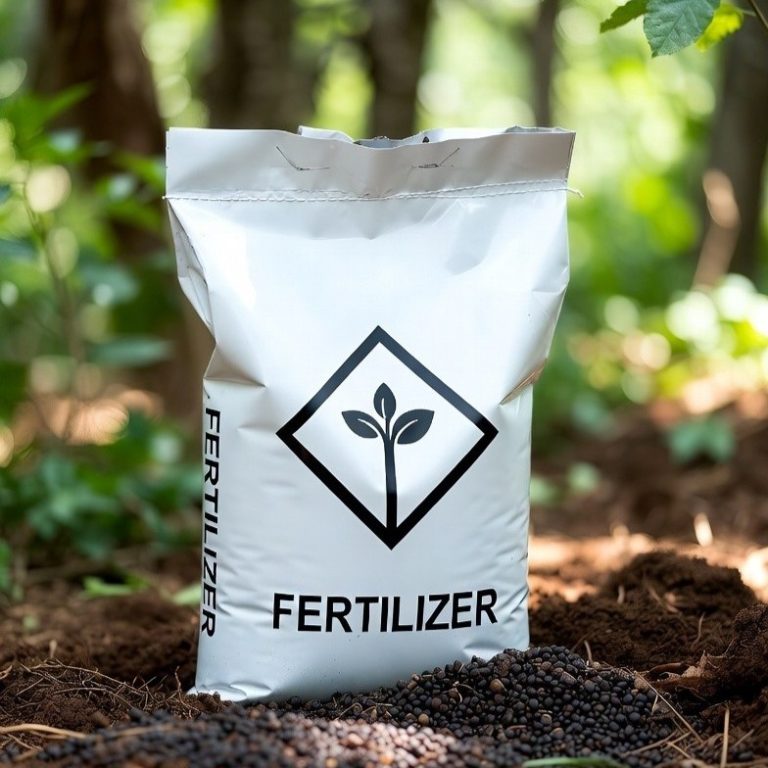
Labeling of agricultural fertilizers has become an important tool in modern agricultural management, which aims to increase safety, productivity and environmental protection.
History of labeling on agricultural fertilizers
The history of labeling chemical fertilizers dates back to the era of modern industrial agriculture. These labels play a vital role in ensuring the correct and safe use of fertilizers.
In the following, the history and evolution of these labels will be examined:
A comprehensive guide to numbers in fertilizer packaging
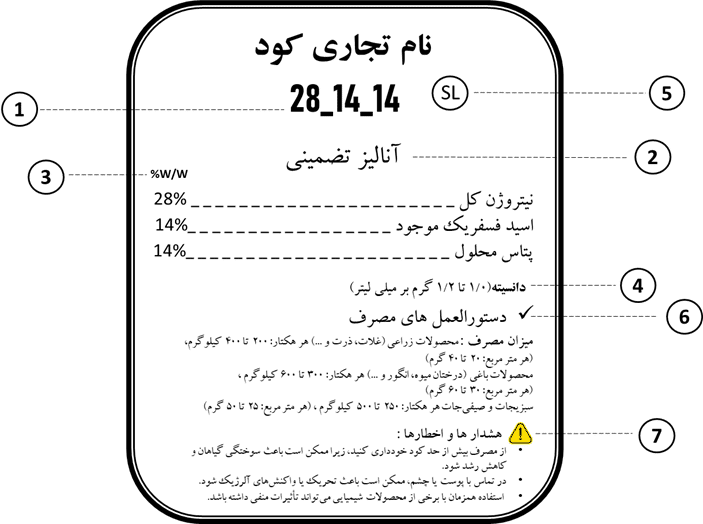
To change this text, click on the edit button. Lorem Epsom is a mock text with an incomprehensible simplicity produced by the printing industry and used by graphic designers.
These three numbers (14, 14, 28) respectively show the weight percentage of nitrogen (N), phosphorus (P) in the form of phosphate (P2O5) and potassium (K) in the form of potash (K2O).
Often for simplicity, these numbers are expressed as nitrogen (N), phosphorus (P) and potassium (K) or N-P-K and are usually calculated based on the amount soluble in water or available to plants.
They also indicate the relative ratio of N, P2O5 and K2O in a fertilizer. Fertilizer ratio is calculated by dividing the numbers by the smallest number in the fertilizer grade. For example, the ratio of this fertilizer (14_14_28) is equal to 2:1:1 or 2 parts of nitrogen to 1 part of phosphate to 1 part of potash.
This ratio is important because soil test recommendations may include the appropriate ratios of fertilizers to meet the nutritional needs of your plants.
Why only these three nutrients?
Plants require larger amounts of nitrogen, phosphorus, and potassium compared to other nutrients. These three key substances are known as primary macronutrients and are essential for all plants. Fertilizer labels may also mention secondary nutrients—such as calcium, magnesium, and sulfur—or micronutrients, such as iron, zinc, and copper. While these elements are necessary for plant growth, plants require them in smaller quantities than the primary nutrients.
Nitrogen (N): Nitrogen is essential for the vegetative growth of plants (leaves and stems).
Phosphorus (P): Phosphorus aids in root development, flowering, and fruit production.
Potassium (K): Potassium is important for plant resistance against diseases, the regulation of water within cells, and the production of proteins. (Types of agricultural fertilizers)
The guaranteed analysis on fertilizer packaging is like a food label, telling you exactly what the product contains. This list assures you that the fertilizer you are purchasing provides at least a specific amount of nutrients, and it also helps you select the right fertilizer for your plants.
Typically, these percentages are expressed on a weight-to-weight (w/w) basis; however, they may sometimes be presented as weight-to-volume (w/v) or volume-to-volume (v/v). Each of these methods has its own specific applications and meanings:
Weight-to-volume percentage (w/v)
Weight-to-volume percentage indicates the weight of a substance present in a specific volume of a solution. This method is typically used for liquid fertilizers or other liquid substances, enabling farmers to easily calculate and apply the required amount of fertilizer based on liquid volume. For instance, if a fertilizer contains 10% nitrogen on a weight-to-volume basis, it means that there are 10 grams of nitrogen in every 100 milliliters of the fertilizer.
Weight-by-weight percentage (w/w)
In the weight-to-weight (w/w) percentage method, the content of nutrients is expressed based on the total weight of the mixture. For example, if you have a 1-kilogram package of fertilizer labeled “10% nitrogen (w/w),” this means the package contains 100 grams of pure nitrogen.
This method is highly accurate and suitable for solid fertilizers—such as those in powder or granular form—and ensures that the nutrient content is uniformly distributed throughout the total weight of the fertilizer.
Volume-by-volume percentage (v/v)
Volume-by-volume percentage is used to express the ratio of the volume of a substance to the total volume of a mixture. This method is primarily applied to liquid solutions where both components (the solute and the solvent) are in a liquid state.
For example, if a solution contains 10% nitrogen on a volume-by-volume basis, it means that there are 10 milliliters of nitrogen in every 100 milliliters of the solution.
Fertilizer density refers to the mass of the fertilizer per unit volume, indicating the amount of substance present in a given volume (such as a liter or a milliliter). Typically expressed in grams per milliliter (g/mL) or kilograms per liter (kg/L), this metric applies to both liquid and solid fertilizers. In essence, it tells us how “heavy” the fertilizer is; for instance, if a liquid fertilizer has a density of 2 g/mL, it means that every milliliter weighs 2 grams.
Density enables farmers to calculate the precise amount of fertilizer required for a specific area—whether based on volume or weight—thereby optimizing usage and preventing waste.
Furthermore, knowing the density allows for the conversion between units of weight and volume. This is particularly important for liquid fertilizers, which are often applied based on volume.
Density serves as a key parameter for ensuring the quality and compositional uniformity of a fertilizer. Unexpected fluctuations in density may indicate issues within the production or storage processes.
Specific Gravity
Specific gravity represents the ratio of a fertilizer’s density to that of water; it serves as an indicator of the fertilizer’s density relative to water.
Have you noticed labels such as SL, SC, WP, or EC on fertilizer packaging? These designations act like an “ID card” for the product, revealing its physical form and intended application. Each of these codes stands for a specific type of formulation—a composition designed for particular methods of use. Below, we explain what each of these labels signifies:
SL (Soluble Liquid)
SL fertilizers—or water-soluble solutions—are products in liquid form that dissolve easily in water. This designation is primarily used for herbicides and fungicides (for the control of weeds and plant diseases) as well as for micro-fertilizers (designed to supply essential micronutrients to plants).
Features:
– Dissolves easily in water, requiring minimal stirring.
– Rapidly absorbed by plants.
– Suitable for irrigation systems and foliar application.
SC (Suspension Concentrate)
SC fertilizers, or suspension concentrates, consist of very fine solid particles suspended within a liquid. These solid particles typically represent the active ingredient used for the control of pests and plant diseases.
Characteristics:
– Requires agitation (mixing) before use.
– The suspended solid particles are distributed uniformly throughout the liquid.
– Generally contains a higher concentration of the active ingredient compared to simple liquid solutions.
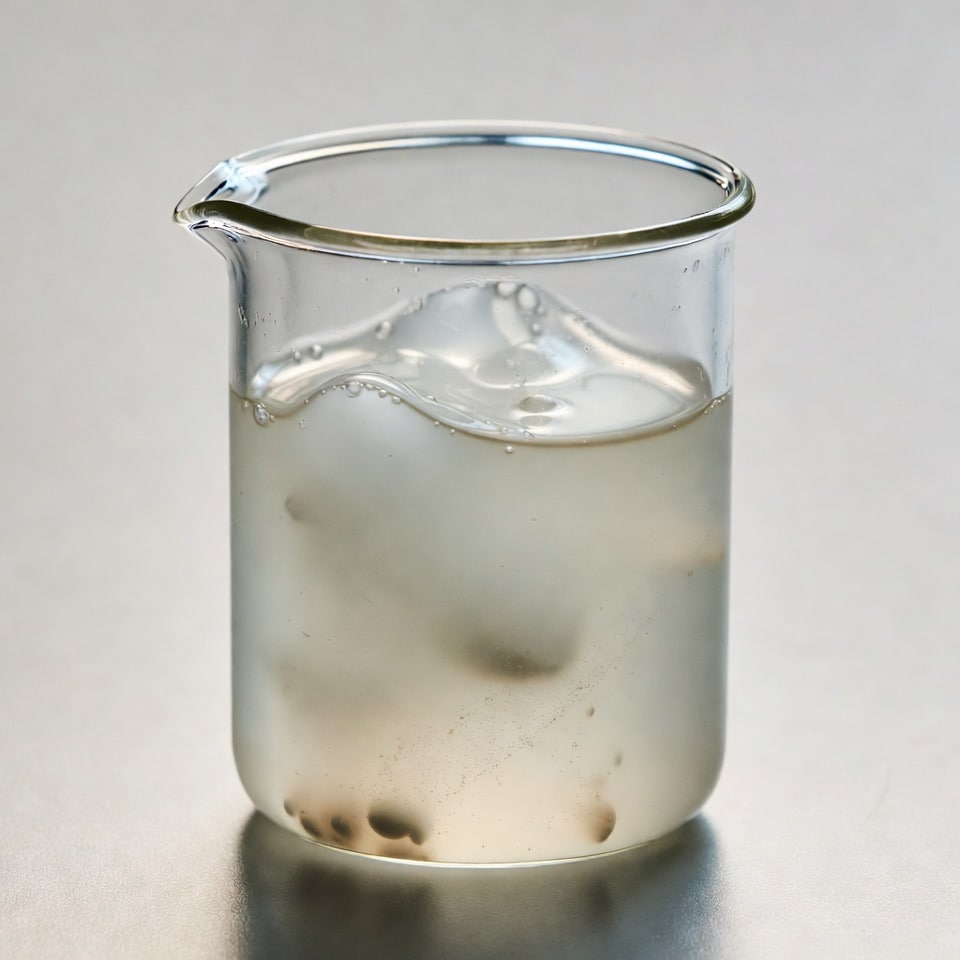
WP (Wettable Powder)
WP fertilizers, or “wettable powders,” come in the form of a dry powder that must be dissolved in water before application. The particles are extremely fine and disperse easily in water. Furthermore, due to their dry state, WP products generally have a longer shelf life than liquid fertilizers.
Characteristics:
– Must be mixed with water prior to application.
– The dry powder is easy to store and transport.
– May require continuous stirring during application to prevent the particles from settling.
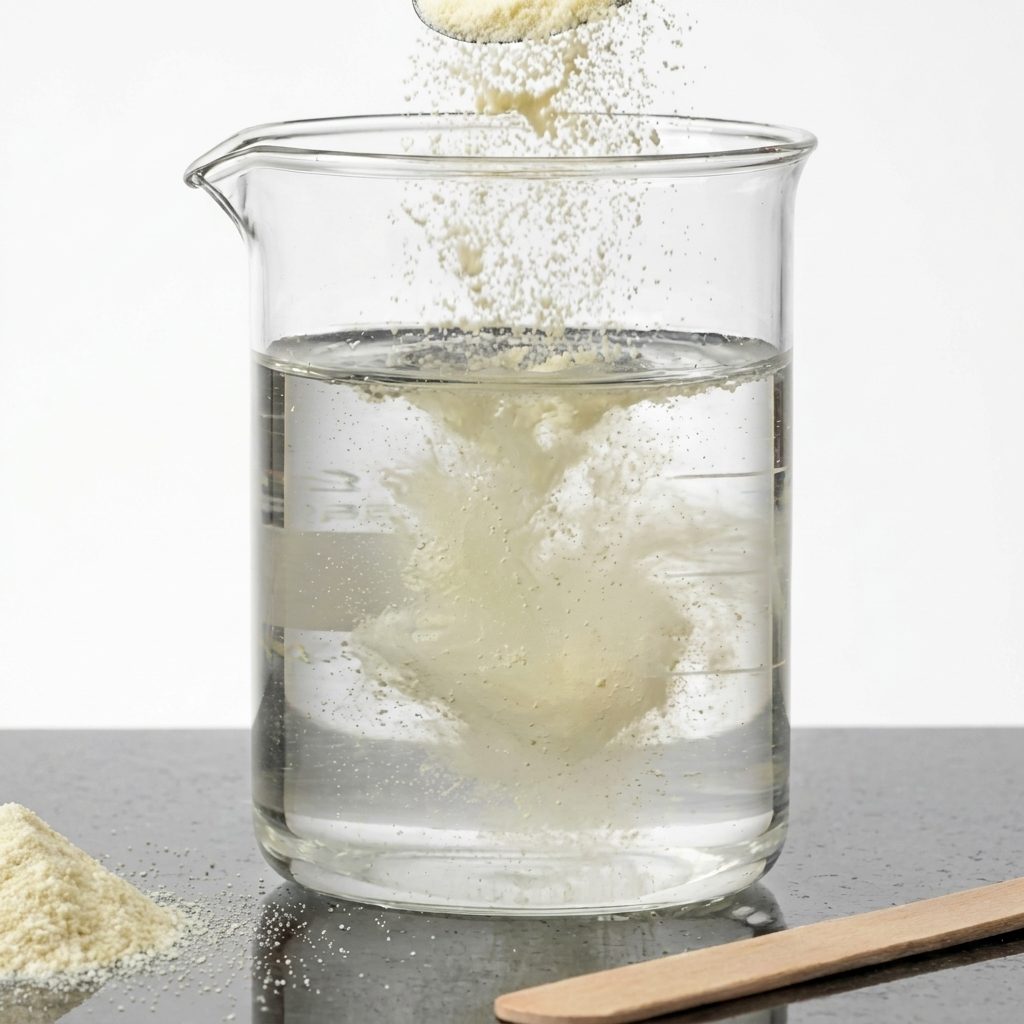
EC (Emulsifiable Concentrate)
EC products, or emulsifiable concentrates, consist of a thick, oily liquid that does not dissolve readily in water. However, with the aid of an emulsifier—a substance that facilitates the mixing of oil and water—the product can form an emulsion within water. An emulsion is a mixture of two immiscible liquids (such as oil and water) in which one is dispersed throughout the other as fine droplets; this formulation is used for a wide range of pesticides.
Characteristics:
– Mixes easily with water to form a stable emulsion.
– Typically contains a higher concentration of the active ingredient.
– Requires agitation (stirring) before use.
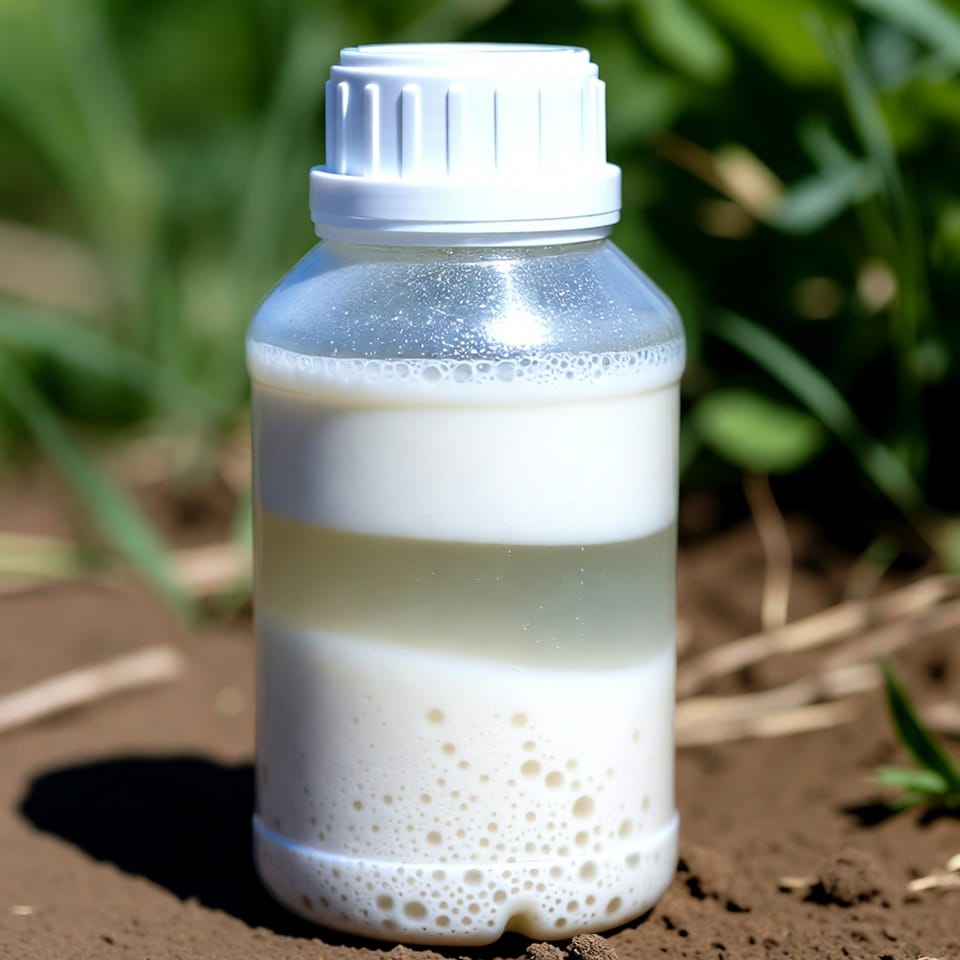
Fertilizer application instructions provide precise and specific information, enabling farmers and gardeners to easily calculate the appropriate amount of fertilizer for various land areas.
**Application Rate**
The amount of fertilizer required for a crop is typically expressed using two primary units:
**Weight:**
The quantity of fertilizer is stated in terms of weight (kilograms, grams). This indicates the specific amount of fertilizer that should be applied.
**Area:**
The size of the agricultural land is expressed in either hectares or square meters. This unit indicates the land area for which a given amount of fertilizer is sufficient.
**Hectare (ha):**
The hectare is generally used for larger tracts of land. One hectare is equivalent to 10,000 square meters.
**Acre:**
The acre is a significant unit of land measurement, used primarily in English-speaking countries. Historically, an acre was defined as the amount of land that a pair of oxen could plow in a single day. Over time, this definition evolved into a standardized unit of measurement. In the imperial/English system, one acre is officially equivalent to 4,046.86 square meters.
**Square Meter (m²):**
The square meter is used for smaller orchards, greenhouses, and smaller plots of land.
**Timing of Application**
The optimal time for fertilizer application depends on several factors, including the plant’s growth stage, the type of crop, soil conditions, weather patterns, and the specific type of fertilizer being used. Considering these factors helps improve productivity and plant health.
The correct and safe use of fertilizers is crucial for safeguarding the health of farmers and protecting the environment. Below are some of the most important warnings and safety precautions typically found on fertilizer packaging:
**Caution Regarding Skin and Eye Contact**
Some fertilizers may cause irritation.
In the event of contact with skin or eyes, wash the affected area with soap and water; seek medical attention if necessary.
**Use Personal Protective Equipment (PPE)**
To prevent direct contact with fertilizers, wear gloves, protective eyewear, and a mask.
**Keep Out of Reach of Children**
Fertilizers can be hazardous to children.
Store fertilizer packaging in a secure location.
**Use in Well-Ventilated Areas**
Use only in areas with adequate ventilation.
Some fertilizers may release harmful gases.
**Avoid Ingestion**
Ingesting fertilizers can lead to poisoning.
If fertilizer is swallowed, seek medical attention immediately.
**Store in a Cool, Dry Place**
Keep fertilizers in a cool, dry environment.
Exposure to moisture or heat may cause some fertilizers to decompose or spoil.
**Do Not Mix with Other Chemicals**
Mixing certain fertilizers with other chemicals can be dangerous.
Only mix fertilizers with other chemicals if explicitly recommended by the manufacturer.
**Follow Usage Instructions**
Strictly adhere to the usage instructions provided on the packaging.
Improper use of fertilizer can damage plants and pollute the environment. Avoid leaving empty packaging in the natural environment.
Dispose of empty packaging properly.
Empty fertilizer packaging can pollute the environment.

No comments yet.